Low cost stool using cake mould
MOULD
PRODUCT
COMPRESSION
HDPE
PP
Low cost stool using cake mould
MOULD
PRODUCT
COMPRESSION
HDPE
PP
In this how to we want to share with you how to prepare a stool with a low cost mould. It is a simple cake tin instead of an engineered mould that works pretty well.
Browse Files
Table of Contents
Before starting you need to decide on which plastic to use and how to get it. We usually use PP or HDPE which we collect locally in Berlin at our workspace. If you don´t have access to plastic flakes you can find it in the bazar:
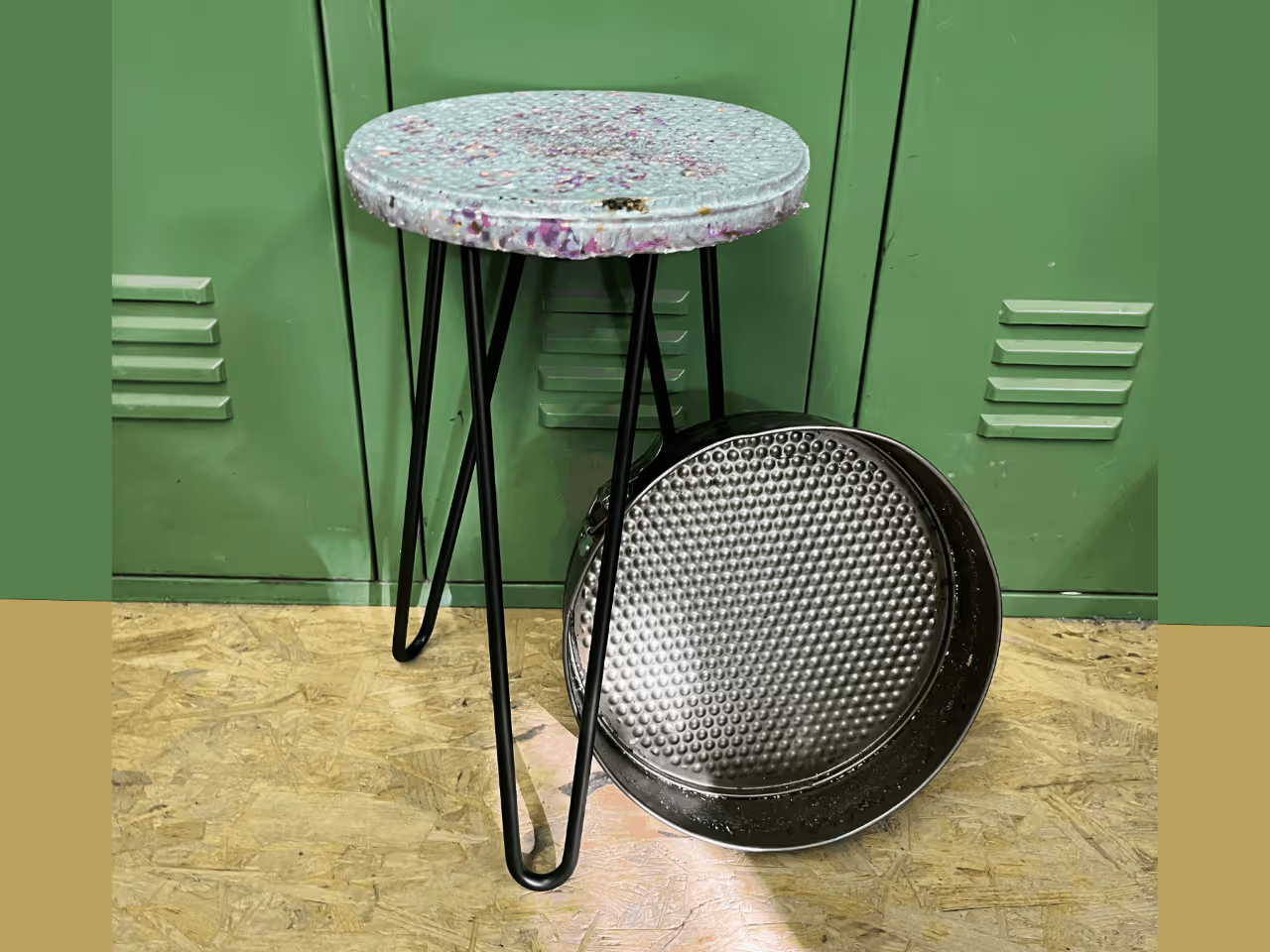
The problem with customised engineered moulds is that they come at a high price especially at the current situation. That is why we use a simple cake tin for the prototype stool mould as you can see in the picture. We simply got it at the supermarket and it works perfectly fine.
Attention: Check if the bottom of the cake tin is even or not. It will later on shape the top of your stool.
As a machine we use a small oven, converted to a compression machine. Simply put the mould in. We heat the oven up to 250° for PP.
Fill the cake tin with your granulated material to the top and put it into the oven. Keep in the oven for about an hour, otherwise the inside of the seat won´t melt. Take out of the oven and let cool down for another hour. Once cooled down, open the cake tin and take out your seat.
Since the top of your seat won´t be even with this technique you will have to equalize it. Therefore, you can use an electric planer. make sure you collect the excess plastic flakes to use later.
Fix legs
First we experimented with wooden legs. However, it is hard to fix them properly to the seat. That´s why in the end we decided to use metal legs that we simply screw below the seat. Still looks great!
For that buy the legs at your local hardwire shop or order online. The legs come with screws. Place the legs equally distributed at the evened bottom of the seat and fix them with the screws.
Turn around & take a seat - your beautiful new stool is ready!


